
If you own a small business, you’ve probably heard the phrase “digital marketing” thrown around a hundred times — by consultants, competitors, or that one friend who “does social media for a living.” But what does it actually mean, and more importantly, what can it do for a business like yours that doesn’t have a Fortune 500 budget?
This guide breaks it down in plain language: what digital marketing is, why it matters, and exactly how it can help a small business grow — with practical steps you can start using today.
What Is Digital Marketing?
Digital marketing is the process of promoting your business, products, or services using online channels and digital technology instead of — or alongside — traditional methods like newspaper ads, billboards, or flyers.
In simple terms: it’s how you get found, get chosen, and get remembered by customers who are searching, scrolling, and shopping online.
Instead of hoping the right person drives past your billboard, digital marketing lets you show up directly in front of someone who is:
- Searching “best bakery near me” on Google
- Scrolling Instagram looking for gift ideas
- Reading reviews before deciding where to eat
- Checking their email for a discount code
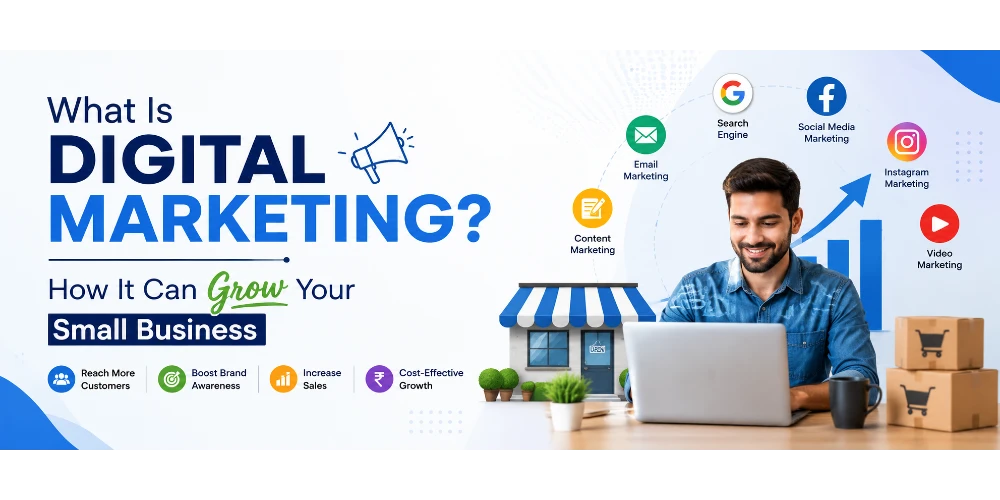
It covers a wide range of tools and tactics, including:
- Search Engine Optimization (SEO) – Getting your website to appear higher in Google search results
- Content Marketing – Blog posts, videos, and guides that answer customer questions and build trust
- Social Media Marketing – Building a presence and engaging customers on platforms like Instagram, Facebook, and LinkedIn
- Email Marketing – Sending offers, updates, and newsletters directly to your customers’ inboxes
- Pay-Per-Click Advertising (PPC) – Paid ads on Google or social media that you pay for only when someone clicks
- Local SEO & Google Business Profile – Help your business appear in Google Maps and local search results to attract more nearby customers.
- Online Reviews & Reputation Management – Build trust and credibility by managing customer reviews and maintaining a strong online reputation.
Unlike traditional marketing, almost everything in digital marketing can be tracked. You can see exactly how many people saw your ad, clicked it, and bought something — which means less guessing and more informed decisions.
Why Digital Marketing Matters for Small Businesses?
Big brands aren’t the only ones who benefit from digital marketing — arguably, small businesses have the most to gain. Here’s why:
1. It Levels the Playing Field
You don’t need a massive ad budget to compete. A well-optimized Google Business Profile or a smart social media strategy can help a local coffee shop outrank or outshine a national chain in local search results.
2. It’s Cost-Effective
Traditional advertising (TV, print, radio) often requires large upfront investments with no guarantee of results. Digital marketing lets you start small — even a $5/day ad budget can generate measurable results — and scale up as you see what works.
3. It Targets the Right People
Instead of advertising to everyone, digital marketing lets you target based on location, age, interests, behavior, and even purchase history. A yoga studio can target “women aged 25–45 interested in wellness within 10 miles” instead of paying for a billboard everyone drives past.
4. It’s Measurable
You can see exactly what’s working. Website visits, click-through rates, conversions, and return on investment (ROI) are all trackable in real time — so you’re not left wondering if your marketing dollars are paying off.
5. It Builds Long-Term Relationships
Through email newsletters, social media engagement, and helpful content, digital marketing helps you stay connected with customers long after their first purchase — turning one-time buyers into repeat customers and brand advocates.
How Digital Marketing Can Grow Your Small Business (Step by Step)
1. Get Found With Local SEO
Most small businesses serve a local audience, which makes local SEO one of the highest-impact, lowest-cost strategies available.
What to do:
- Claim and fully optimize your Google Business Profile (formerly Google My Business)
- Add accurate business hours, photos, and services
- Collect and respond to customer reviews
- Use location-based keywords on your website (e.g., “plumber in Austin, TX”)
A strong local SEO presence means when someone searches for what you offer nearby, you show up — often before they even consider your competitors.
2. Build a Website That Converts
Your website is often the first real impression a potential customer gets. It should be:
- Fast-loading and mobile-friendly (most searches happen on phones)
- Easy to navigate, with clear calls-to-action (“Book Now,” “Get a Quote,” “Shop Now”)
- Optimized with relevant keywords so search engines understand what you offer
Think of your website as your 24/7 salesperson — it should be working for you even while you sleep.
3. Use Content Marketing to Build Trust
Publishing helpful blog posts, how-to guides, or videos related to your industry positions you as an expert and helps you show up in search results for questions your customers are already asking.
Example: A local landscaping company could publish “5 Signs Your Lawn Needs Aeration” — attracting homeowners searching for that exact problem, and naturally leading them to your services.
4. Leverage Social Media Strategically
You don’t need to be on every platform — you need to be where your customers actually are.
- Instagram/TikTok – Great for visually appealing products, behind-the-scenes content, and younger audiences
- Facebook – Strong for local community engagement and older demographics
- LinkedIn – Ideal for B2B services and professional audiences
Consistency matters more than perfection. Posting useful, authentic content regularly builds familiarity and trust over time.
5. Run Targeted Paid Ads
Platforms like Google Ads and Meta (Facebook/Instagram) Ads let small businesses run highly targeted campaigns with flexible budgets.
Why this works for small businesses:
- You only pay when someone clicks (PPC) or takes a desired action
- You can set daily budget caps, so spending stays controlled
- You can test small campaigns before committing bigger budgets
6. Nurture Customers With Email Marketing
Email remains one of the highest ROI digital marketing channels. A simple monthly newsletter or automated welcome sequence can:
- Remind past customers to come back
- Announce promotions or new products
- Build a personal connection with your audience
7. Track, Learn, and Improve
One of the biggest advantages of digital marketing is the ability to measure what’s working. Tools like Google Analytics and social media insights let you see:
- Where your traffic is coming from
- What content or ads perform best
- Where customers drop off before converting
This data lets you continuously refine your strategy instead of guessing.
Common Mistakes Small Businesses Make in Digital Marketing
- Trying to be everywhere at once – Spreading efforts too thin across every platform instead of focusing where your audience actually is
- Ignoring mobile users – A slow or clunky mobile site can drive customers straight to competitors
- Inconsistent posting or advertising – Digital marketing is a long game; sporadic effort rarely produces lasting results
- Not tracking results – Without data, it’s impossible to know what’s actually working
- Neglecting reviews – Online reviews heavily influence buying decisions, especially for local businesses
Getting Started: A Simple Digital Marketing Checklist
If you’re just beginning, here’s a manageable starting point:
- Claim and optimize your Google Business Profile
- Ensure your website is mobile-friendly and fast
- Choose 1–2 social media platforms where your audience is active
- Start a simple monthly email newsletter
- Publish one helpful blog post or video per month
- Set a small, controlled budget for paid ads to test what converts
- Review your analytics monthly and adjust accordingly
You don’t need to do everything at once. Start small, be consistent, and build from there.
Final Thoughts
Digital marketing isn’t just a buzzword — it’s one of the most powerful, accessible tools available to small business owners today. It allows you to compete with bigger players, reach the exact customers who are looking for what you offer, and build lasting relationships that turn into repeat business.
The businesses that grow fastest online aren’t necessarily the ones with the biggest budgets — they’re the ones who show up consistently, understand their audience, and use data to keep improving.
Start with one or two strategies from this guide, measure your results, and build momentum from there. Growth in digital marketing is rarely instant — but it compounds.